.jpg/:/rs=h:121,cg:true,m/qt=q:95)
.jpg/:/rs=h:104,cg:true,m/qt=q:95)
Free Addition and Subtraction Games for K-3
Addition and Subtraction Games for Early Math Intervention
Addition and subtraction are the backbone of early elementary math — but students don't develop these skills at the same pace, and gaps that form in kindergarten and first grade tend to compound quickly. The resources on this page target the specific addition and subtraction strategies that the Primary Numeracy Assessment data shows K–2 students most commonly struggle with: counting on, counting back, making ten, doubles facts, near doubles, and multidigit operations. Every resource is free, requires no login, and is designed to be used during whole-class smartboard instruction, small group Tier 2 intervention, or independent practice. Each activity produces a score, giving teachers an immediate progress monitoring data point without any grading.
If you are looking for a more structured approach, the Primary Numeracy Intervention Program is a free K–3 math intervention that includes a diagnostic assessment, leveled activity guides, workbooks, and over 100 ready-to-use resources — all built around the same foundational skills targeted on this page.
Dice Addition — Counting On Game for K–2
Count On & Counting Back — K–2 Addition and Subtraction Game
Cookie Thief — Counting Back Subtraction Game

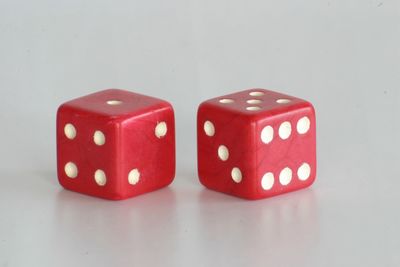
Roll the dice and practice addition! Count all the dots in Level 1, then challenge yourself to count on in Level 2. With built-in scaffolding that guides you every step of the way, it's perfect for Kindergarten, First, and Second Grade.
Cookie Thief — Counting Back Subtraction Game
Count On & Counting Back — K–2 Addition and Subtraction Game
Cookie Thief — Counting Back Subtraction Game
Cookie Thief is a fun classroom math game where a sneaky stripe-suited thief steals cookies from a jar — and students must count back to figure out how many are left. With built-in animations, a 0–12 number line, and a whole-class reveal screen, it makes learning subtraction engaging for kindergarten and first grade learners.
Count On & Counting Back — K–2 Addition and Subtraction Game
Count On & Counting Back — K–2 Addition and Subtraction Game
Count On & Counting Back — K–2 Addition and Subtraction Game
Count On & Counting Back is a K–2 math game that builds the critical skill of holding a number in your head and counting forward or backward from it — breaking the habit of counting everything from one. . Teacher-paced and smart board-friendly, every round ends with a full counter reveal so the class can check their thinking together.
Make Ten — Addition Strategy Game
Doubles Facts — Addition Fluency Game
Count On & Counting Back — K–2 Addition and Subtraction Game
Make Ten! is a browser-based math game that gives students repeated practice with the Make Ten addition strategy. Using visual ten frames, students learn to move counters to make a group of ten, then quickly find the sum. The game pulls 10 random problems per round from a full bank of combinations with left frame values of 5–9, making it a great fit for math centers, early finishers, or at-home practice. No login or app required — just open and play.
Subtraction to 20 (Count up or Back)
Doubles Facts — Addition Fluency Game
Doubles Facts — Addition Fluency Game
This free interactive game builds flexible subtraction thinking for students in grades 1–3. Rather than defaulting to a single strategy, students make a strategic decision before each problem — should I count up or count back? For a problem like 15 − 13, counting up from 13 is far more efficient than counting back 13 steps. And if students are already connecting subtraction to their addition facts, they may not need the number line at all.
From there, students hop through the solution on a clickable number line one number at a time, with an optional finger-counting hand tracking each hop. A final answer is entered on an on-screen number pad — no keyboard required.
Perfect for whole-class smartboard instruction, small group intervention, or independent math center practice.
Doubles Facts — Addition Fluency Game
Doubles Facts — Addition Fluency Game
Doubles Facts — Addition Fluency Game
Doubles Facts! reinforces the doubles facts for 6, 7, 8, and 9 using the same rhymes from class. Students move through four quick learning activities before testing themselves in a quiz. No login or app required — just open and play.
Doubles +1 and -1 — Near Doubles Strategy Game
Multidigit Addition and Subtraction — Jumping and Splitting Strategies
Multidigit Addition and Subtraction — Jumping and Splitting Strategies
Use what you know about doubles to solve tricky addition problems! Spot the hidden double, then add one more or take one away to find the answer. Three levels take you from spotting the strategy to solving it completely on your own. Scaffold from near doubles to applying the strategy.
Multidigit Addition and Subtraction — Jumping and Splitting Strategies
Multidigit Addition and Subtraction — Jumping and Splitting Strategies
Multidigit Addition and Subtraction — Jumping and Splitting Strategies
A fun, interactive math game for elementary students that teaches addition and subtraction using two key strategies — jumping along a number line and splitting numbers with arrow cards. Students choose two-digit or three-digit problems, practice with or without regrouping and borrowing, and get visual step-by-step support every time.